
EUVP visit story - Milena Galstyan
My EUVP Visit: From nomination to experiencing the EU from within
Milena GALSTYAN is the Community Manager of the Young European Ambassadors (YEAs) in Armenia under the EU Neighbours East Regional Communication Programme. Milena promotes awareness of the EU and EU–Armenia relations, amplifies youth voices, and ensures community needs are reflected in decision-making.
My EUVP journey began with my nomination by the EU Delegation to Armenia, a moment I received with both excitement and gratitude. The YEAs initiative in Armenia works closely with the EU Delegation to Armenia, with strong support from the Head of the Delegation, Vassilis MARAGOS. This cooperation has provided YEAs with valuable opportunities to engage in high-level exchanges, including meetings with the European Commissioner for Enlargement Marta KOS, and Kaja KALLAS, the High Representative of the Union for Foreign Affairs and Security Policy/Vice-President of the European Commission. For me, moments like these are when young people become changemakers, gaining space not only to ask questions but also to build meaningful relationships with decision-makers. The prospect of participating in the EUVP excited me as it meant I would gain this space once again. Having friends and colleagues who are EUVP alumni, I had already heard first-hand about the Programme’s value and the depth of the experience it provides. Based on their experiences, I was very much looking forward to taking part and to engaging fully in the Programme myself.
From the very beginning, the experience felt highly personalised. Everything, from travel arrangements to the structure of the study visit, was carefully organised, reflecting a strong commitment to tailoring each visit to each participant’s background and interests.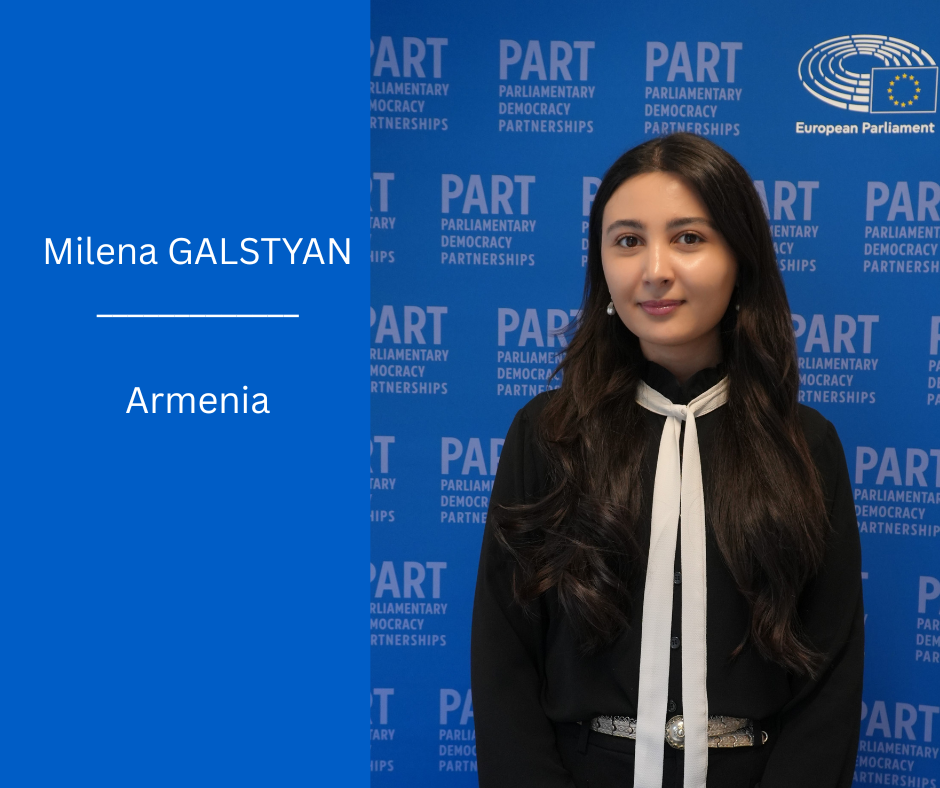
Upon arrival, the EUVP experience truly begins. For one intensive week, it offers a unique opportunity to immerse yourself in the EU world and, in a way, become part of it.
My visit was an inspiring journey. Through my professional work with the EU Neighbours East Regional Communication Programme, I am involved in disseminating information and raising awareness about the European Union and EU-Armenia relations. A key part of my work is breaking down complex EU concepts and terminology, making them accessible to wider audiences in my country. Visiting EU institutions and seeing how they function from within added a valuable new dimension to this work.
One key challenge, especially in remote areas, is fear that closer relations with the EU could threaten Armenia’s national identity and that EU values are perceived to contradict traditional beliefs. Local representation within the YEAs helps address these concerns, as people are more receptive when messages come from within their own communities. Young people like me returning home with positive experiences from programmes like the EUVP or Erasmus can help shift attitudes among hesitant families. The EU–Armenia Visa Liberalisation Dialogue, launched in 2024, is another positive step towards easier mobility and exchanges with the EU.
The learning and exchange began from the very first day, starting with a meeting with Andreas KETTIS, Head of EUVP. One piece of advice he shared particularly resonated with me: that EU processes are often about compromises, and that these should not be perceived as losses, but rather as means towards a greater good and a better future. Throughout the visit, this perspective provided a valuable lens through which to understand EU decision-making.
One of the best features of the EUVP is the opportunity to meet representatives from the EU’s main institutions and to engage in substantive and insightful discussions. During my visit, I had particularly enriching meetings with the European External Action Service (EEAS), including with the Political Advisor to the EU Special Representative (EUSR) for Human Rights. I also had the opportunity to meet representatives from several Directorates-General of the European Parliament and the European Commission, including the Directorate-General for External Policies of the Union (DG EXPO), the Directorate-General for Parliamentary Democracy Partnerships (DG PART), the Directorate-General for Justice and Consumers (DG JUST), the Directorate-General for Climate Action (DG CLIMA), and the Directorate-General for the Environment (DG ENV).
These exchanges significantly deepened my understanding of how EU policies are developed, coordinated and implemented, and how core values such as human rights, democracy and sustainability are mainstreamed across different policy areas.
As a young professional from an EU Eastern Neighbourhood country, one of my primary interests during the visit lay in the EU’s neighbourhood policy and external action. This is why I was happy to have a meeting with several representatives from the European Commission’s Directorate-General for Enlargement and the Eastern Neighbourhood (DG ENEST). When the EU granted candidate status to Georgia, Moldova, and Ukraine, many Armenian young people like me saw this as proof that sustained engagement can pay off. It offered us hope that closer alignment with the EU is not merely aspirational, but achievable. At the same time, such reforms only succeed when the public understand and support them. There is growing interest among Armenian young people to engage with the EU and pursue closer ties. This is reflected in the increasing number of young people joining the YEAs each year. Each new generation brings fresh ideas, and you can see shifts in the way of thinking.
I was very pleased that, thanks to a well-balanced and thoughtfully structured programme, I was able to engage with all my areas of interest in a meaningful way. Overall, the EUVP is a truly tailor-made experience, shaped around each visitor’s professional trajectory and interests. For future EUVP participants, my advice would be to fully enjoy the experience, use the opportunity wisely, and engage as actively as possible. The Programme offers a rare chance for first-hand exchange with EU institutions and professionals, and it is this direct interaction that makes the EUVP both meaningful and memorable.
Last but not least, I would encourage young people to act locally and think European. Meaningful change often begins at the local level, within our own communities. If we want to bring the EU closer to our countries and societies, we must engage and take action at home, keeping EU values in mind and in our actions. These fundamental principles, such as respect for human dignity, democracy, equality, freedom, the rule of law, and human rights, are values I believe we all share, and they provide a strong foundation for cooperation and a better common future.