
EUVP visit story - Tom Vizel
From Brussels to MENA: Learning from Europe’s Human Infrastructure
Tom Vizel, Founder and Executive Director WeAreMENA Network
When I joined the European Union Visitors Programme, I arrived in Brussels at a moment of deep uncertainty in my own region. What I did not expect was that this visit would sharpen, rather than suspend, the questions I carry in my work, about cooperation, identity, and the role of young people in shaping a different future.
I work as the founder of WeAreMENA (WRM), a growing network of youth organisations across the Middle East and North Africa. Today, the network connects 17 organisations from ten countries, working together to create meaningful encounters between young people across divides. Our focus is not only on dialogue, but on building long-term partnerships rooted in education, shared experiences, and trust.
Coming to Brussels, I was not looking for abstract inspiration. I was looking for something more practical: how regions marked by deep historical tensions can move from fragmentation toward cooperation, and what role structured youth engagement can play in that process.
One of the strongest impressions from the Programme was the European understanding that cooperation is not only a political or economic process, but a human one. The European project did not emerge solely from treaties and institutions, but from sustained investment in people, particularly in young people, as agents of connection.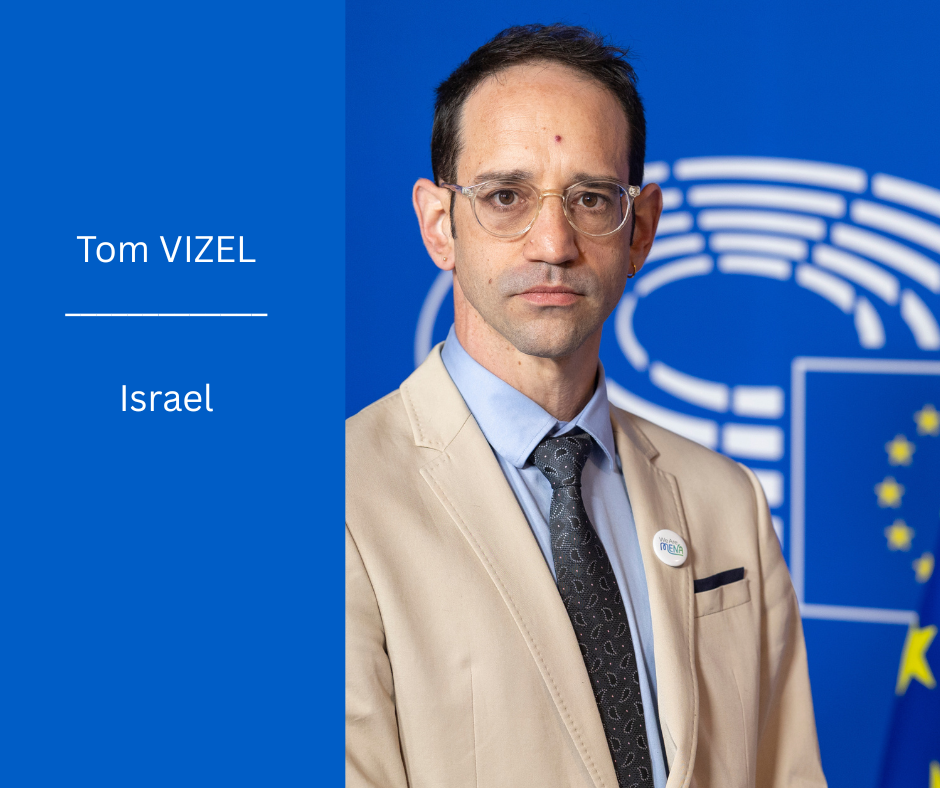
Programmes such as Erasmus stood out not only for their scale, but for their underlying philosophy: that repeated, immersive encounters between individuals can gradually reshape perceptions, identities, and ultimately, political realities. Europe did not erase its differences; it created frameworks that allowed those differences to coexist and interact constructively.
This idea resonates deeply with our work in WRM. In our region, political agreements alone have not been enough to create a sense of shared future. Beneath many formal arrangements, there remains a deep layer of mistrust and dehumanisation. Changing this reality requires more than diplomacy, it requires encounters that are personal, sustained, and transformative.
During my visit, I was particularly struck by how European institutions are thinking about the Mediterranean today. Initiatives aimed at strengthening cooperation between Europe and its southern neighbours reflect a growing recognition that the future of the region is interconnected. Within this context, youth engagement is not treated as an auxiliary field, but increasingly as a strategic pillar.
This creates a meaningful opportunity for organisations like WRM. While European frameworks bring scale, structure, and policy direction, regional networks can contribute something different, proximity to the ground, cultural sensitivity, and the ability to convene diverse actors across societies.
One of the key insights I take from this experience is that these two dimensions, institutional frameworks and grassroots engagement, are not alternatives, but complements. The challenge, and opportunity, lies in building bridges between them.
Looking ahead, we see a strong potential to deepen this connection. In the coming year, we aim to expand our work by bringing together leadership from across our network for a regional gathering, and to continue developing our research on youth organisations and best practices for meaningful encounters. We also see opportunities to engage more actively with European partners around shared priorities in the Euro-Mediterranean space.
At the same time, the visit reinforced something more personal. It reminded me that long-term change is built through persistence, through institutions that evolve over time, and through individuals who choose to remain engaged even when the path forward is uncertain.
In a recent gathering WeAreMENA leadership held in Paris, I spoke about the inspiration we draw from Europe, not as a model to replicate, but as a reminder that regions marked by conflict can choose a different trajectory. As I said then, the transformation of Europe was not the result of a single agreement, but of a sustained commitment to cooperation, including through youth engagement and shared experiences.
The EUVP experience brought this idea into sharper focus. It showed that behind policies and programmes, there is a long-term investment in building what might be called a “human infrastructure” for cooperation.
For those of us working in regions where such infrastructure is still emerging, this is both a lesson and a call to action.
I leave Brussels with a deeper appreciation for what has been built in Europe, and with a renewed commitment to contribute, in our own way, to building something that takes inspiration from the European Union to the Middle East and North Africa.