
EUVP visit story - Heriniaina Ramboatiana
My name is Heriniaina Ramboatiana, a Malagasy entrepreneur committed to the development of sustainable agricultural value chains in Madagascar.
I had the honour of serving as President of SYMABIO (Malagasy Organic Agriculture Syndicate), and I remain actively involved today as a Board Member and Chair of the Commission for Organic Agriculture Territories, an initiative aimed at structuring territories dedicated to the development of organic and sustainable agriculture in Madagascar.
I also serve as a Board Member of the Economic Development Board of Madagascar (EDBM), the national agency responsible for promoting investment and economic development in the country. In addition, I am a Board Member of the CNIM (National Council for the Industrialisation of Madagascar), which contributes to strategic reflection on the country’s industrial development.
Through these different responsibilities, I work to promote sustainable agriculture, to highlight the value of people and Madagascar’s exceptional biodiversity, and to develop agricultural value chains capable of creating value for Malagasy producers while meeting the requirements of international markets.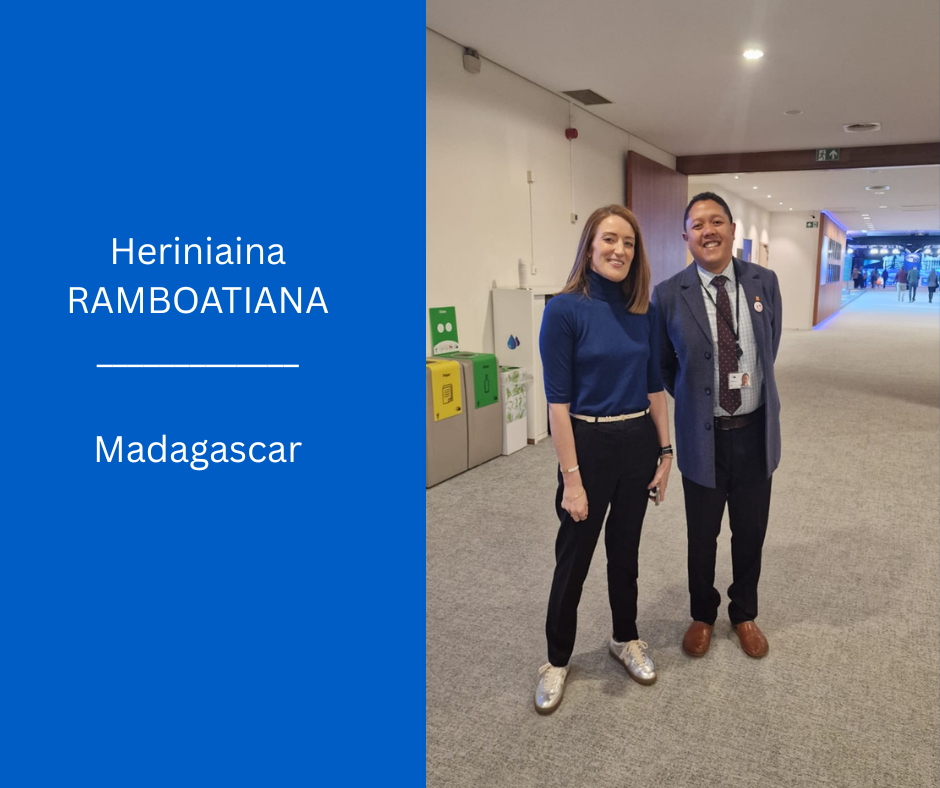
In this context, my participation in the EU Visitors Programme (EUVP) represented an exceptional opportunity to deepen my understanding of how European institutions operate and to strengthen dialogue between Madagascar and the European Union.
A valuable opportunity for dialogue and mutual understanding
Thanks to the selection and coordination of the Delegation of the European Union to Madagascar, I had the opportunity to travel to Brussels and meet with several officials and experts from European institutions.
During the Programme, I had the chance to engage with key stakeholders from DG SANTE, DG INTPA, DG AGRI, as well as representatives from the European Investment Bank (EIB) and officials responsible for development cooperation with Madagascar. I also met with researchers from the European Parliamentary Research Service (EPRS).
In addition, I had the opportunity to meet organisations based in Belgium that play an important role in international agricultural innovation and research, such as CGIAR and CIAGO.
These discussions were particularly insightful and constructive. The people I met demonstrated deep expertise in their respective fields and were able to respond clearly and transparently to the many questions I raised.
I also had the honour of meeting Mr Eric Sargiacomo, Member of the European Parliament, whose vision on international cooperation and sustainable development was particularly inspiring. I also had the opportunity to meet Mr Stefan Köhler, Member of the European Parliament.
One of the most memorable moments of the visit was meeting Her Excellency Roberta Metsola, President of the European Parliament. I was particularly impressed by her simplicity, openness, and remarkable ease of communication. For an ordinary person, it is extremely rare to have the opportunity to meet leaders at such a high level, which made this encounter especially meaningful. Without the EUVP, I believe I would never have had the opportunity to meet so many inspiring individuals.
Beyond the institutional meetings, the visit also provided the opportunity to discover the city of Brussels, a true international and political hub. I also had the chance to visit the Parlamentarium, which offers a fascinating overview of the origins of the European Union, its functioning, and the role played by European citizens in its development.
Sharing Madagascar’s realities and challenges
One of the most important aspects of this visit was the opportunity to share the realities and challenges faced by Madagascar.
As former President of SYMABIO and a board member of both EDBM and CNIM, I was able to explain to European interlocutors the challenges Madagascar faces in implementing certain European regulations and legislative frameworks, particularly in areas such as agriculture, pesticide regulation, international trade and compliance with international standards.
I was also able to highlight EU-funded development projects that are already delivering positive results and making a significant contribution to Madagascar’s development.
These exchanges were particularly valuable in helping explain the realities of a developing country that is rich in natural resources but faces significant structural, logistical and economic constraints.
I also had the opportunity to present initiatives already developed in Madagascar through cooperation between the private and public sectors, particularly in the field of organic agriculture. This includes the development of a national organic agriculture law and the creation of territories dedicated to organic agriculture, aimed at structuring agricultural value chains and promoting production systems that respect both people and the environment.
Madagascar possesses extraordinary biodiversity that is unique in the world, representing both a responsibility and an opportunity. The sustainable valorisation of this natural wealth is a key challenge for the country, both economically and environmentally.
Better understanding how the European Union works
One of the most valuable outcomes of this programme was gaining a deeper understanding of how the European Union functions institutionally.
Before this visit, I already had a general awareness of EU institutions. However, the EUVP allowed me to better understand the respective roles of the European Commission, the European Parliament, and the Council of the European Union, as well as how these institutions interact in shaping European policies.
The welcome session was particularly helpful in explaining the history of European integration and the progressive development of the EU institutional system. In many ways, this model of regional cooperation and governance could also serve as a source of inspiration for other regions of the world, including Africa.
I was also impressed by the importance given within European institutions to scientific research, policy analysis and impact assessment. This evidence-based approach plays a crucial role in the development of European policies.
The importance of the EUVP alumni network
I strongly believe that the EUVP alumni network is a valuable platform for strengthening connections between the European Union and partner countries around the world.
It could be very beneficial to organise future gatherings of EUVP alumni in Brussels or Strasbourg, allowing participants to share developments in their respective countries and highlight the positive impact of EU initiatives across different regions.
Maintaining ongoing dialogue with European institutions would also help alumni stay informed about evolving EU policies and identify new opportunities for cooperation.
A programme that builds bridges
The EUVP represents much more than an institutional visit. It creates a genuine space for dialogue, exchange and mutual understanding between the European Union and its international partners.
For me personally, this experience not only strengthened my understanding of European institutions but also reinforced the importance of collaboration between Madagascar and the European Union, particularly in areas such as sustainable development, agriculture and biodiversity valorisation.
At a time when the world faces major global challenges — from food security and environmental protection to economic development — initiatives that foster dialogue and international cooperation are more important than ever.
The EUVP plays a crucial role in building bridges between cultures, institutions and people committed to creating a more sustainable and inclusive future.